Snap Foundation: Strategic Plan 2024 - 2027
How a tech foundation sharpened its focus and built the infrastructure to create equitable pathways to the creative economy for underrepresented LA youth.

Image Credit: Snap Foundation
The Assignment
The Snap Foundation approached Platypus Advisors at a pivotal moment of organizational transition. With a new executive director, new board members, and a shifting external landscape, including the LA 2028 Olympics, rapid advances in generative AI, and an evolving creative economy, the Foundation needed to align around a shared direction for the years ahead.
The challenge: Develop a clear, actionable 3-year strategic plan that would unify the board and staff around mission, vision, values, and priorities, and translate that alignment into a practical Year 1 roadmap.
The Context
The Snap Foundation's mission is to develop pathways to the creative economy for underrepresented youth in Los Angeles. LA's creative economy is a $161 billion contributor to the regional economy and is projected to add nearly 39,000 jobs over the next decade, yet its workforce does not reflect the diversity of the city it calls home. White-identifying people comprise just 26% of the LA population but hold 59% of arts workforce jobs. BIPOC youth, who make up the majority of young Angelenos, face systemic barriers to accessing the education, mentorship, and employment opportunities that would allow them to participate in and benefit from this growing sector.
The Foundation had been grantmaking since 2019, disbursing over $22 million across hundreds of organizations. But its giving was spread broadly, its theory of change was implicit rather than explicit, and its internal operations were still maturing. With new leadership and a refreshed board, this was the moment to build the strategic clarity needed to maximize impact.
Our Role & Process
Phase 1 | Discover: Internal and External Sensemaking
Reviewed the Foundation's full history of giving, auditing grant patterns, grantee relationships, and action area alignment
Conducted LA landscape research including demographic analysis, creative economy data, and sector trends
Benchmarked 5–7 peer foundations to understand comparable approaches to mission, focus areas, and grant making practice
Identified key gaps: the portfolio lacked explicit alignment to a theory of change, and the vision statement was too broad to guide strategic decisions
Phase 2 | Dream: Stakeholder Engagement and Co-Design
Conducted one-on-one interviews with all board members to surface individual priorities, concerns, and aspirations
Interviewed 9 nonprofit leaders working across the creative economy pipeline to understand partner needs, landscape gaps, and opportunities for the Foundation to add value
Prepared a synthesis deck consolidating findings, opportunities, and strategic questions as a pre-read for the board offsite
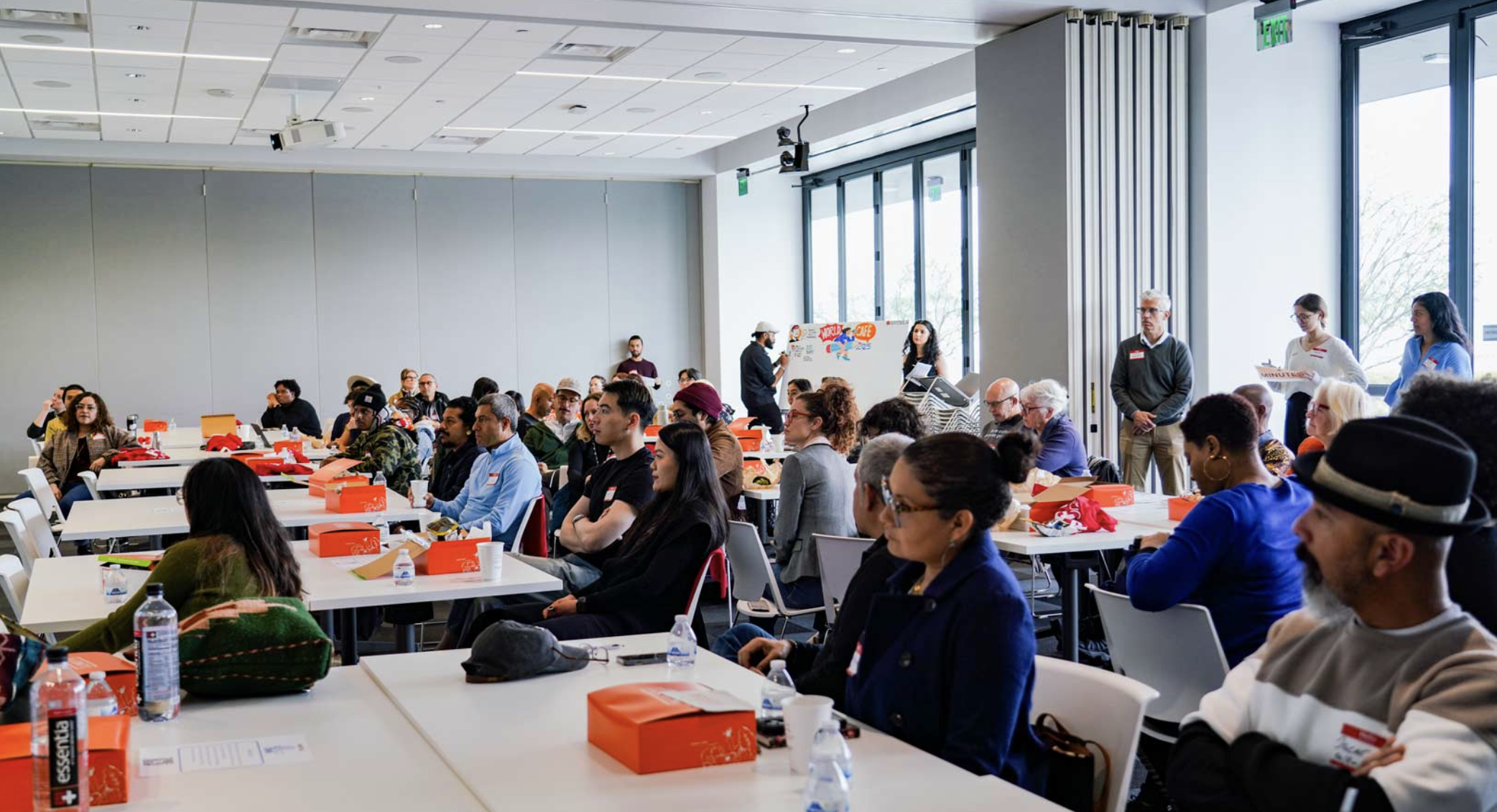
Facilitated a full-day strategic planning offsite with the board in November 2023, building consensus around focus areas, theory of change, and values
Phase 3 | Refine and Deploy: Strategic Plan Development
Worked with Foundation staff to develop and refine all components of the strategic plan based on board feedback
Proposed and refined updated mission, vision (three candidate versions), and values language
Developed a revised theory of change mapping inputs, activities, outputs, outcomes, and impact
Built a 3-year roadmap with four key priority areas and a detailed Year 1 implementation timeline
The Outcome
Strategic Clarity and Focus
The Foundation narrowed its grant making from a broad portfolio to three defined focus areas: Creative Education and Skills (60% of portfolio), Creative Economy Career Exploration and Readiness (15%), and Creative Economy Workforce Entry and Advancement (15%), with a remaining 10% reserved for responsive grant making and broader creative ecology support. This focus gives both staff and grantees a clear picture of where the Foundation is heading and why.
A Revised Theory of Change
The Foundation now has an explicit, board-approved theory of change connecting its financial and human resources to activities, measurable outputs, meaningful outcomes, and a long-term vision of a creative economy workforce that reflects, supports, and enhances the rich diversity of Los Angeles.
Four Priority Areas for 2024-2027
The strategic plan organizes the Foundation's work into four interconnected priorities: Maturing Internal Operations, Centering Grantees, Advancing the Conversation, and Expanding Programming through big bets: significant, innovative investments designed to create outsized impact.
A Practical Year 1 Roadmap
The Foundation entered 2024 with a quarter-by-quarter action plan spanning programs, communications, grants, and operations; from hiring a grants associate and hosting the first grantee convening, to redesigning the website and beginning to identify 1–2 potential big bet focus areas.
The Impact
The Snap Foundation now operates with a shared strategic language and a coherent framework for decision-making at every level, from individual grant decisions to board recruitment to long-term programmatic investment. By grounding strategy in both the realities of the LA youth landscape and the Foundation's own organizational capacity, the plan sets a realistic and ambitious path forward: one that centers grantee relationships, builds toward systems-level change, and positions the Foundation to make bold bets in service of the young Angelenos it exists to serve.